Introduction
Perfume is the art of time. Having learned how to elegantly select the ideal "hotspots" for fragrance application, the next step is understanding the scent's longevity and presence. The secret to all this lies in the simple acronyms marked on the bottle label: EDP, EDT, and EDC.
These abbreviations represent the precise ratio between the fragrance oil and the alcohol base. Like an architect's structural calculation, this ratio determines whether your scent will be a brief and bright encounter, or a quiet and enduring companionship.
Ⅰ. The Skeleton of Scent: The Art of Pure Perfume Oil Ratio
All perfumes are composed of fragrance oil, alcohol, and water. The core difference in the concentration codes lies in the percentage of Concentrated Perfume Oil within the solution. This ratio dictates the scent's strength, duration, and its very personality.
| Code | Full Name (Meaning) | Perfume Oil Concentration | Longevity | Scent Presence (Aura) |
|---|---|---|---|---|
| EDP | Eau de Parfum | $15% \sim 20%$ | $6 \sim 8$ Hours | Rich and composed. Excellent mid and base note performance, leaving an elegant and prolonged impression. |
| EDT | Eau de Toilette | $5% \sim 15%$ | $3 \sim 5$ Hours | Light and lively. Active top notes, clear middle notes, suitable for daily wear and a fresh feeling. |
| EDC | Eau de Cologne | $2% \sim 4%$ | Under $2$ Hours | Instant refreshment. Rapid evaporation, centered on bright citrus or herbaceous top notes. |
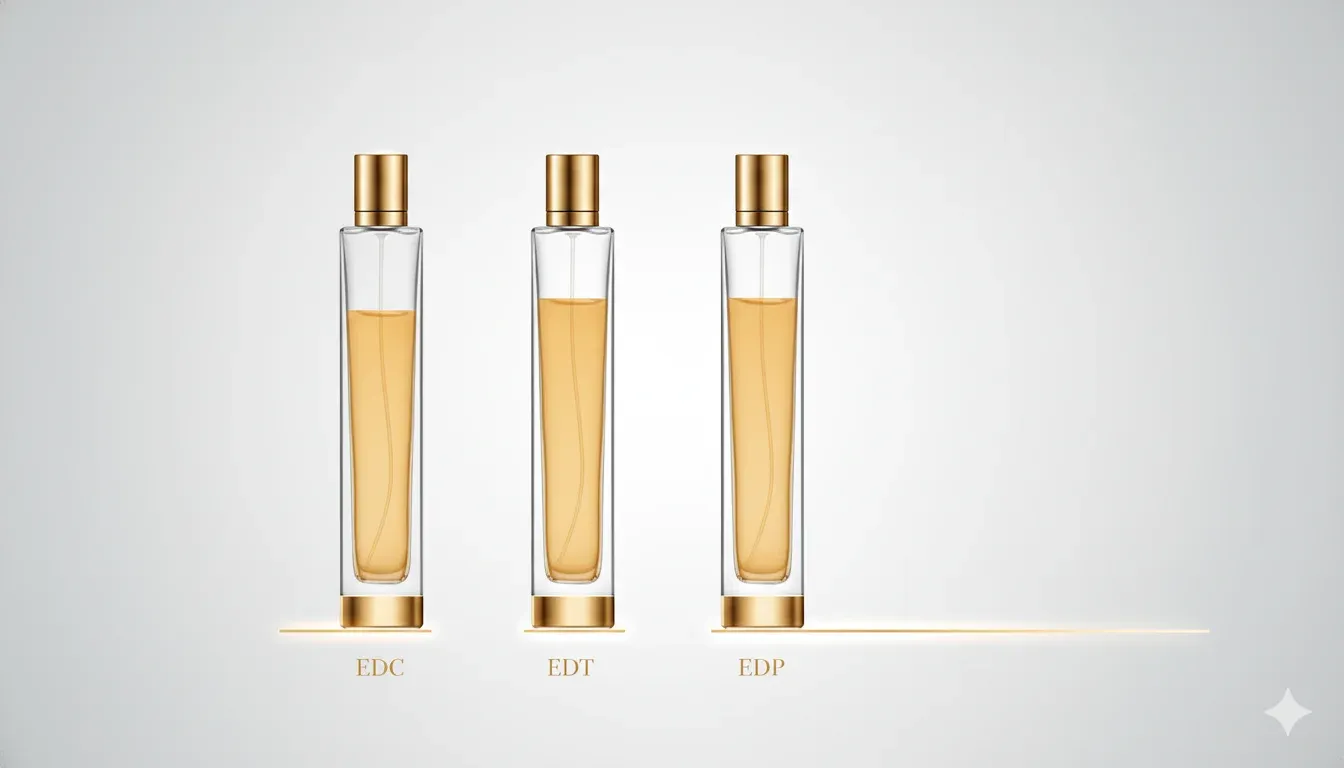
EDP, EDT, EDC concentration comparison and characteristics illustration
Ⅱ. In-Depth Analysis: The "Poetry and Practicality" of Three Concentrations
1. EDP (Eau de Parfum): Composed Attachment and Luxurious Endurance
【Personality Traits: Steady, Deep, Long-lasting】
The high concentration of EDP allows it to feature a rich middle and base note structure. This means that after the initial brightness of the top notes fades, the perfume's core soul—the warm woods, amber, or florals—will linger on the skin for an extended time.
Practical Trick: Ideal for occasions that require the scent to maintain a lasting aura, such as evening events, important meetings, or an entire workday. Due to its strength, application should be extremely precise—only a small amount on the pulse points is necessary.
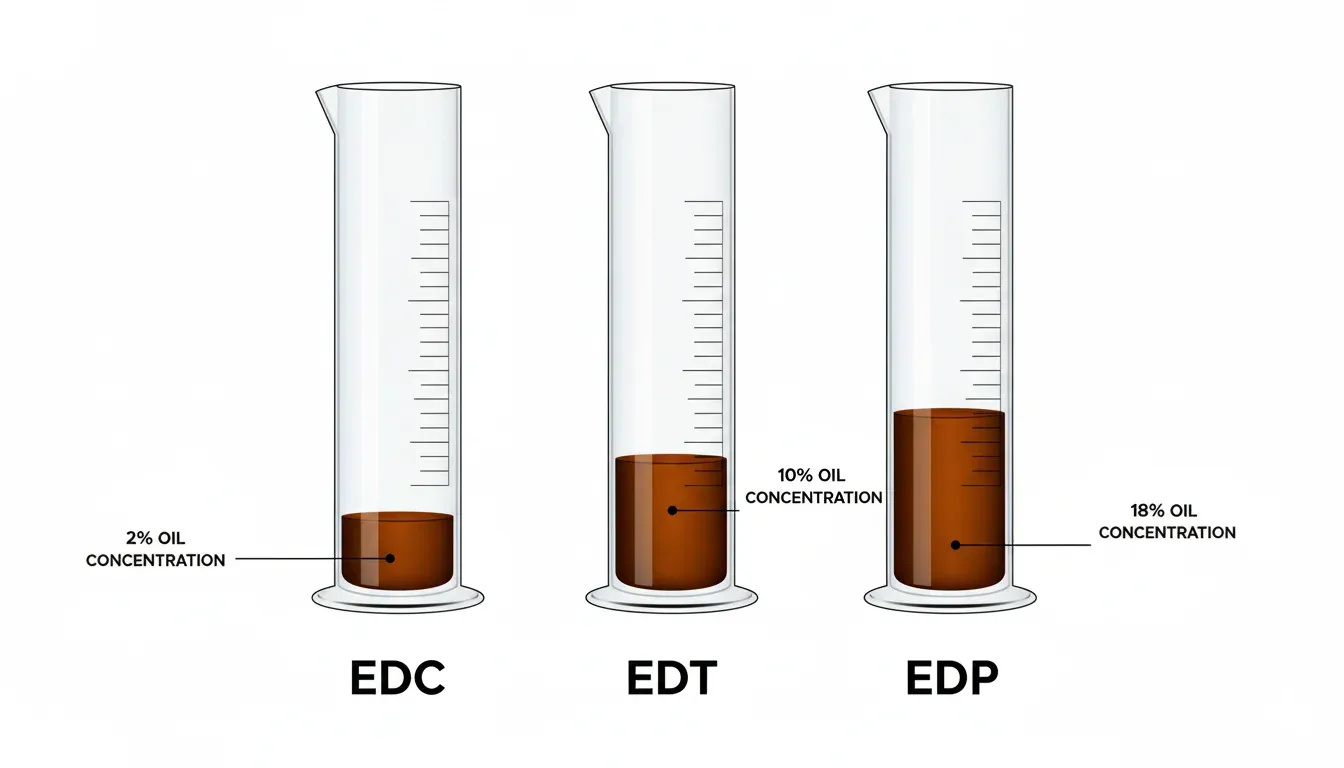
EDP's high concentration brings rich layers and lasting performance
2. EDT (Eau de Toilette): Light Silhouettes and Daily Companionship
【Personality Traits: Light, Fluid, Moderate】
EDT is the most common choice in the market. Its structure is designed to emphasize fresh, bright top notes, which then transition into a softer heart. Its diffusion (Sillage) is generally milder and less invasive than EDP.
Practical Trick: It blends seamlessly into daily life, such as the office or daytime casual outings. If you are new to perfume, EDT offers ample room for experimentation and practicality. You may reapply slightly more often to maintain freshness throughout the day.
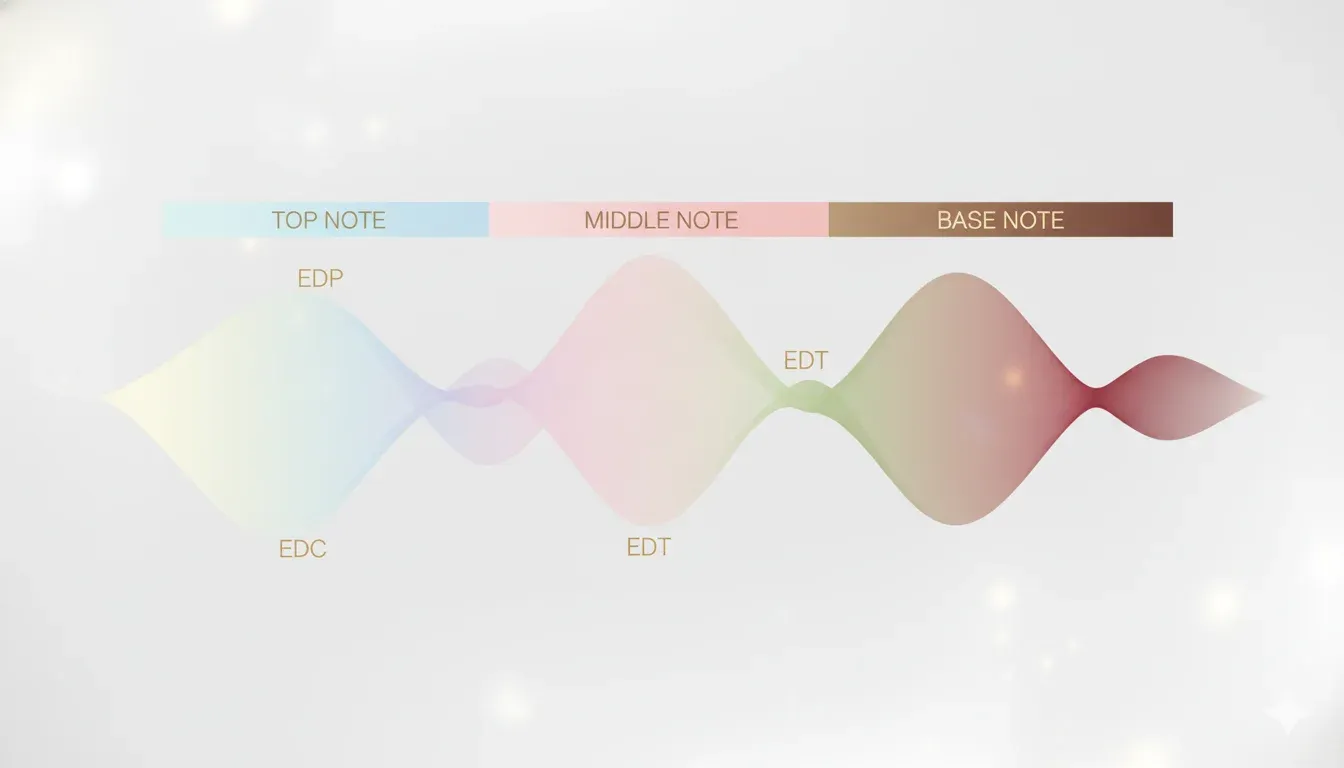
EDT and EDC's light characteristics and daily application scenarios
3. EDC (Eau de Cologne): Instant Uplift and Sensory Ritual
【Personality Traits: Instantaneous, Uplifting, Simple】
Cologne represents a minimalist freshness. Its low concentration leads to rapid evaporation, and it is typically filled with bright, cheerful components like citrus, lemon, and bergamot. Its goal is not longevity, but immediate sensory pleasure and a mental lift.
Practical Trick: Not suitable if you are seeking long-lasting effects. It is better used as a morning ritual or an afternoon reset. You can spray it liberally, even on clothing or in a space, to enjoy an instant burst of freshness.
💡 Conclusion: Choosing Your Time Philosophy
Selecting a concentration is like choosing a philosophy of time: Do you want your scent to be like a long novel (EDP), rich in layers and captivating? Or like a cheerful poem (EDT), recited daily for personal joy? Or perhaps a crisp chime (EDC), instantly refreshing and clean-cut?
By understanding these concentration codes, you can more modernly and boldly select the precise fragrance to match your "hotspots" and mood, allowing your scent expression to achieve the most elegant balance.
➡️ What Should We Focus on Next?
We have now mastered the techniques of application and the selection of concentration. The next step is to delve deeper into the materials and imagery of perfume. In the next article, we will explore:
🍊 Floral, Fruity, Woody, and Amber: Understanding the Seven Core Fragrance Families