Introduction
In the world of Fine Dining, chefs go to great lengths to capture the most subtle aromas of their ingredients. However, if your perfume is too overpowering, this sensory feast might effectively end the moment you are seated.
This isn't just about manners; it's about the science of how scent and taste interact. A true connoisseur knows how to make fragrance an accent to life, rather than an enemy of gastronomy.
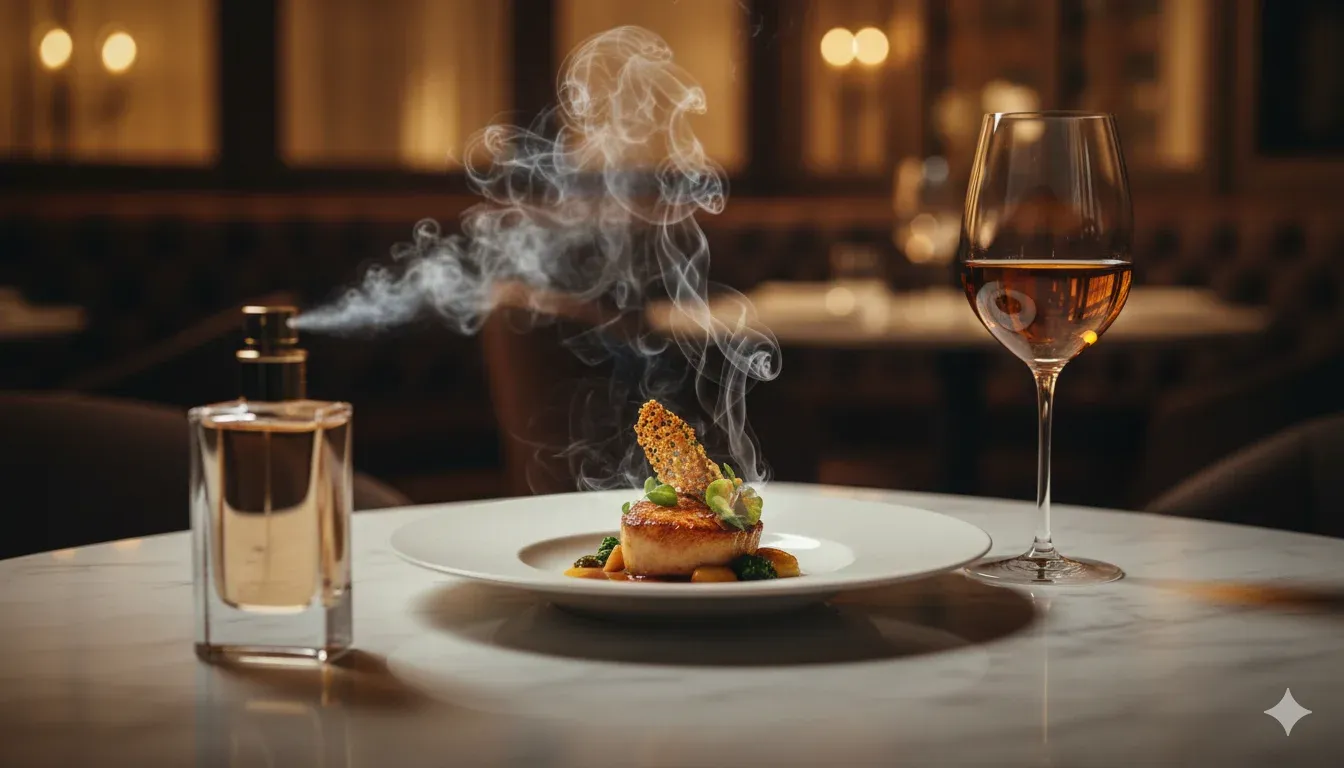
Ⅰ. The Scientific Truth: We Are Actually "Smelling" Our Food
You may have heard that taste is only 20% of the experience; the remaining 80% actually comes from your sense of smell.
Retronasal Olfaction: When we chew food, aroma molecules rise from the back of the mouth to the nasal cavity. The brain then integrates these scent signals with the basic tastes (sweet, sour, bitter, salty) on the tongue to create "flavor."
Sensory Interference: If you are wearing heavy Tuberose or Synthetic Musks, these potent molecules will hijack your olfactory receptors first. The result? Even the most expensive truffle or Wagyu beef might taste like nothing more than bland fiber, because your brain is too busy processing your perfume to notice the chef's masterpiece.
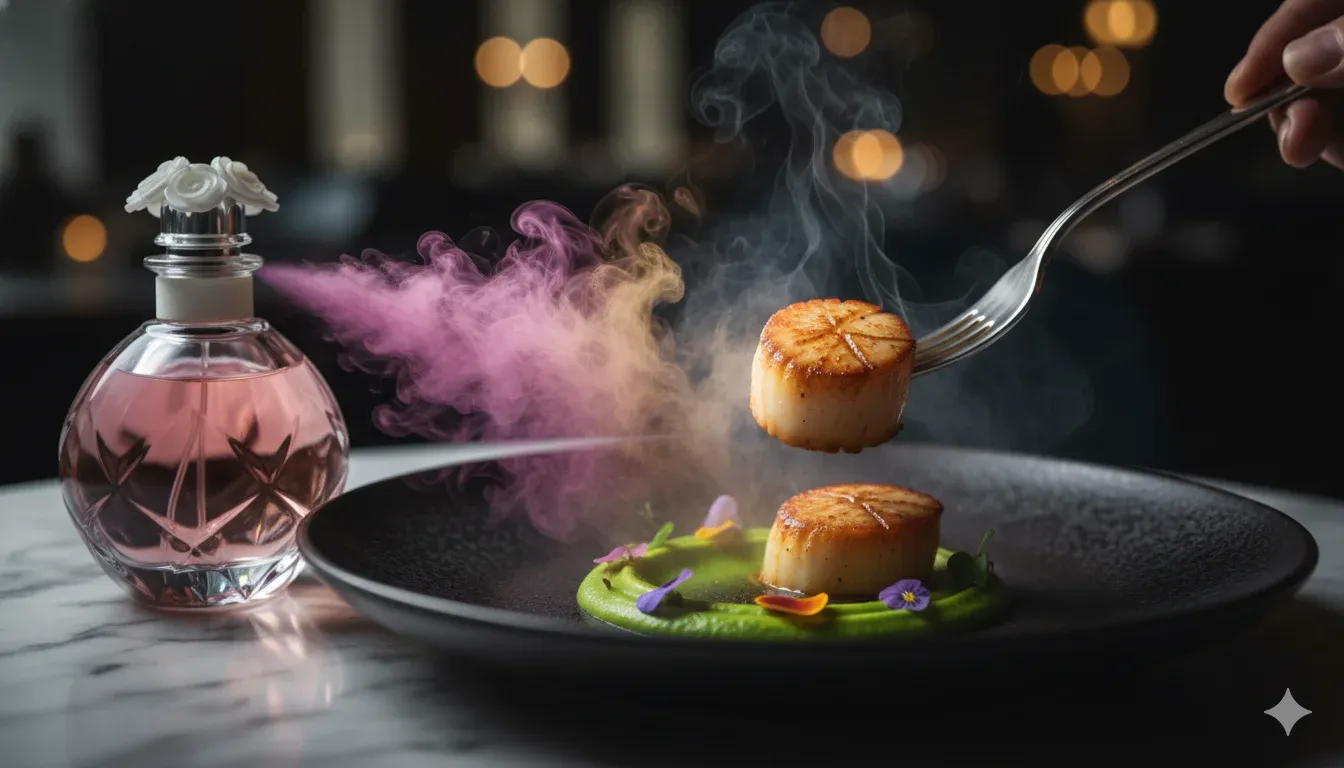
Ⅱ. Olfactory "Danger Zones" in Restaurants
While not all fragrances are forbidden at the dinner table, certain profiles are natural rivals to fine cuisine:
High-Intensity White Florals: Jasmine and Gardenia have "predatory" scents that can completely mask the delicate nuances of a fine white wine or fresh seafood.
Heavy Oriental Spices: Intense Oud or heavy notes of clove and cumin can clash violently with the seasoning of a refined dish, leading to "palate confusion."
Long-Wear Synthetic Fixatives: Some modern fragrances use massive molecules for 24-hour longevity. These create an invisible "wall of scent" around you, disrupting the dining experience for everyone at your table and neighboring ones.
Ⅲ. The Connoisseur's Dining Strategy
To remain elegant without compromising the culinary experience, consider these advanced techniques:
The "Lower Body" Method: Apply your fragrance only to the back of your knees or ankles. This allows the scent to waft gently as you walk, but keeps it below the table level once seated, preventing it from rising directly to your—or others'—nose.
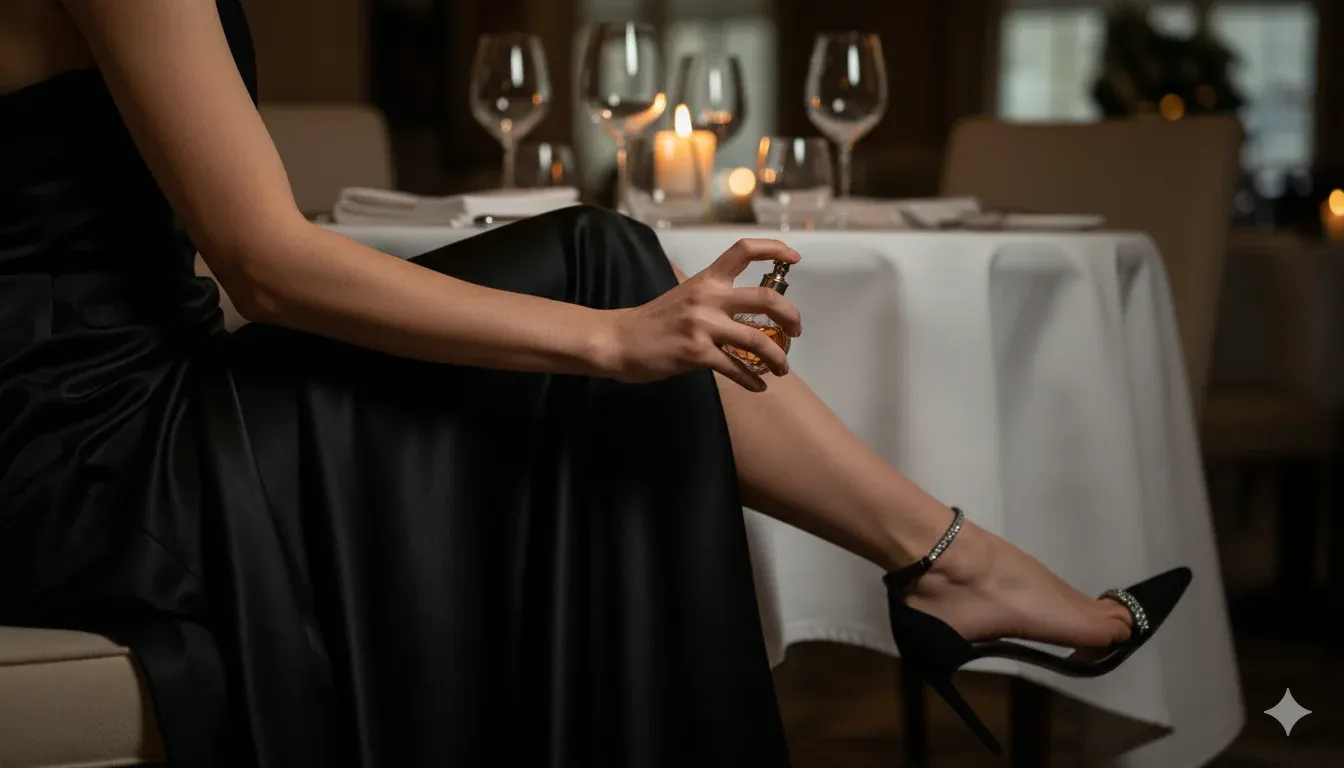
Applying fragrance to the ankles ensures the scent stays below table level, demonstrating "sensory empathy"
Choose "Green" or "Transparent Woods": Scents featuring grass, citrus, or light cedarwood coexist more naturally with food and avoid the "chemical vs. natural" clash.
The One-Hour Rule: Ensure you apply your scent at least one hour before arriving. This allows the initial alcoholic blast and heavy sillage to dissipate, leaving only a warm, intimate skin-scent.
💡 Conclusion: True Sophistication is "Sensory Empathy"
At a fine dining table, the most beautiful aromas should be the scent of freshly baked bread, the savory char of a perfectly aged steak, and the tannins of a red wine that has finally begun to breathe.
When you choose to moderate your fragrance for the sake of a meal, that "sensory empathy" is a mark of ultimate refinement. It shows that you not only understand fragrance but also respect the chef's craft and the rights of your fellow guests to enjoy their meal. True elegance is never loud; it is found in silent consideration.