Introduction
Have you ever had this experience? You reach for a long-lost favorite bottle, only to find the scent has become sharp or the liquid has darkened. Your first thought might be: "Has it expired?"
In reality, the "expiration date" on a perfume bottle is often more about commercial regulations than the actual lifespan of the fragrance. By understanding the science of preservation, you can effectively freeze the "soul" of your perfume indefinitely.
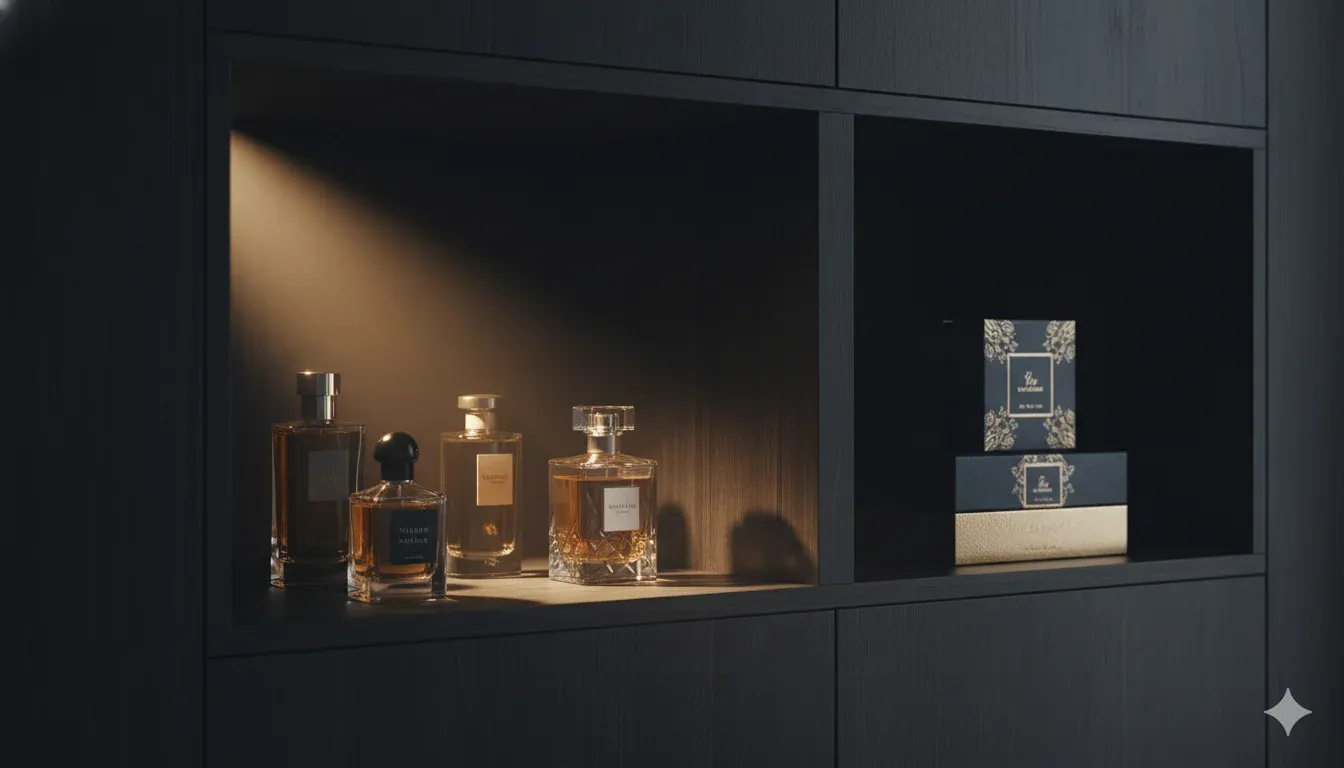
I. Does Perfume Really "Expire"?
From a scientific standpoint, perfume is a mixture of high-concentration alcohol, water, and essential oils. Alcohol itself acts as an excellent natural preservative.
Oxidation: The core reason perfume degrades is "oxidation." When fragrance molecules are exposed to air or external energy (like light and heat), their chemical structure begins to change.
The Vanishing Top Notes: The most vulnerable components are the highly volatile small molecules, such as citrus and green notes. This explains why an older perfume might smell like "paint" or "metal" immediately after spraying. However, if you wait a few minutes, the heart and base notes (like wood or amber) usually remain perfect and even more mellow.
II. The "Big Three" Enemies of Fragrance
To keep your scent "ageless," you must defend it against these physical elements:
Light: UV rays break the chemical bonds between fragrance molecules, causing the liquid to fade or turn cloudy. This is why many niche perfumes use dark-colored glass or come in sturdy, opaque boxes.
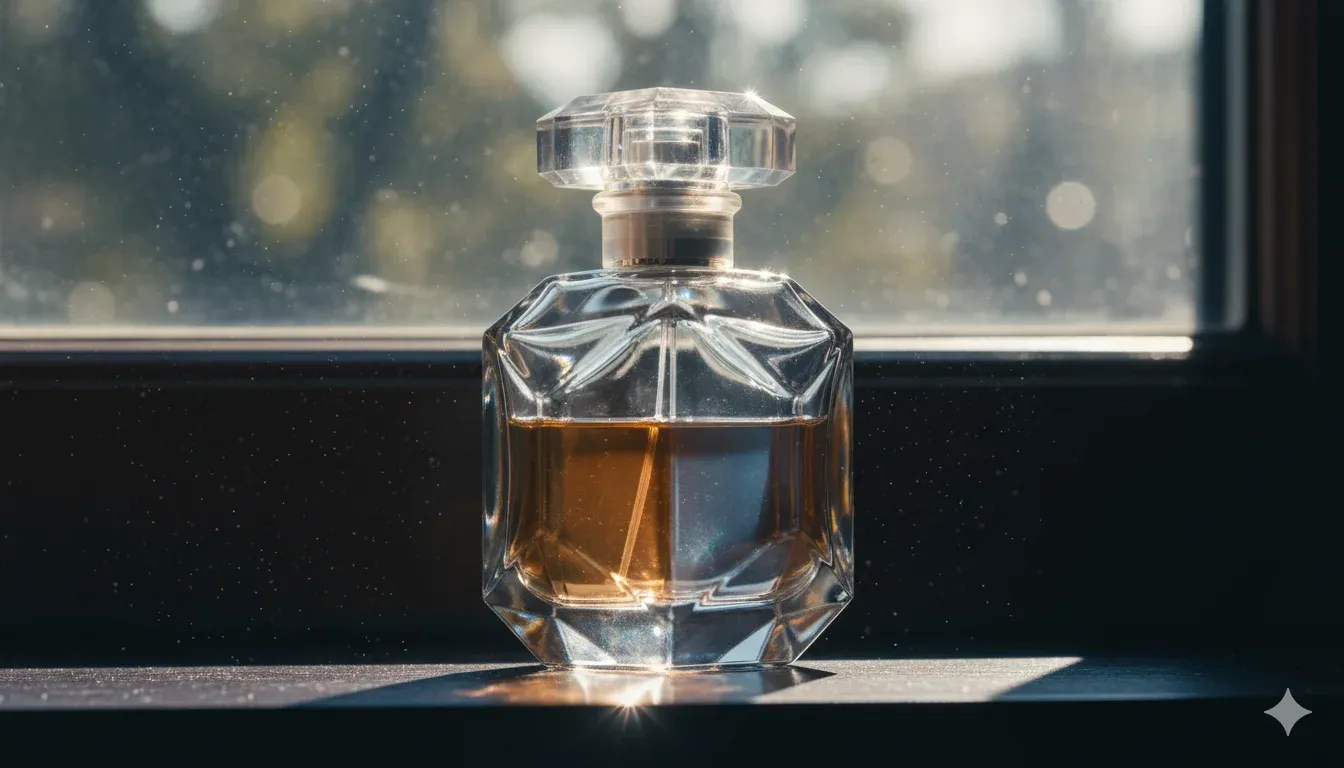
Storing perfume on a sunny windowsill accelerates oxidation and causes degradation
Heat: Fluctuating temperatures accelerate chemical reactions. Storing your perfume on a sunny windowsill or near a radiator can cause the oxidation process to speed up exponentially.
Humidity: Many people store their collection in the bathroom. However, constant shifts in humidity and temperature are a nightmare for stability. Moisture can seep into the atomizer's crevices, compromising the chemical integrity and even leading to spoilage at the nozzle.
III. Pro Tips for "Ageless" Storage
If you own a growing collection, follow these golden rules:
Avoid the Bathroom and Windowsill: The ideal storage location is a cool, dry, and dark drawer or closet.
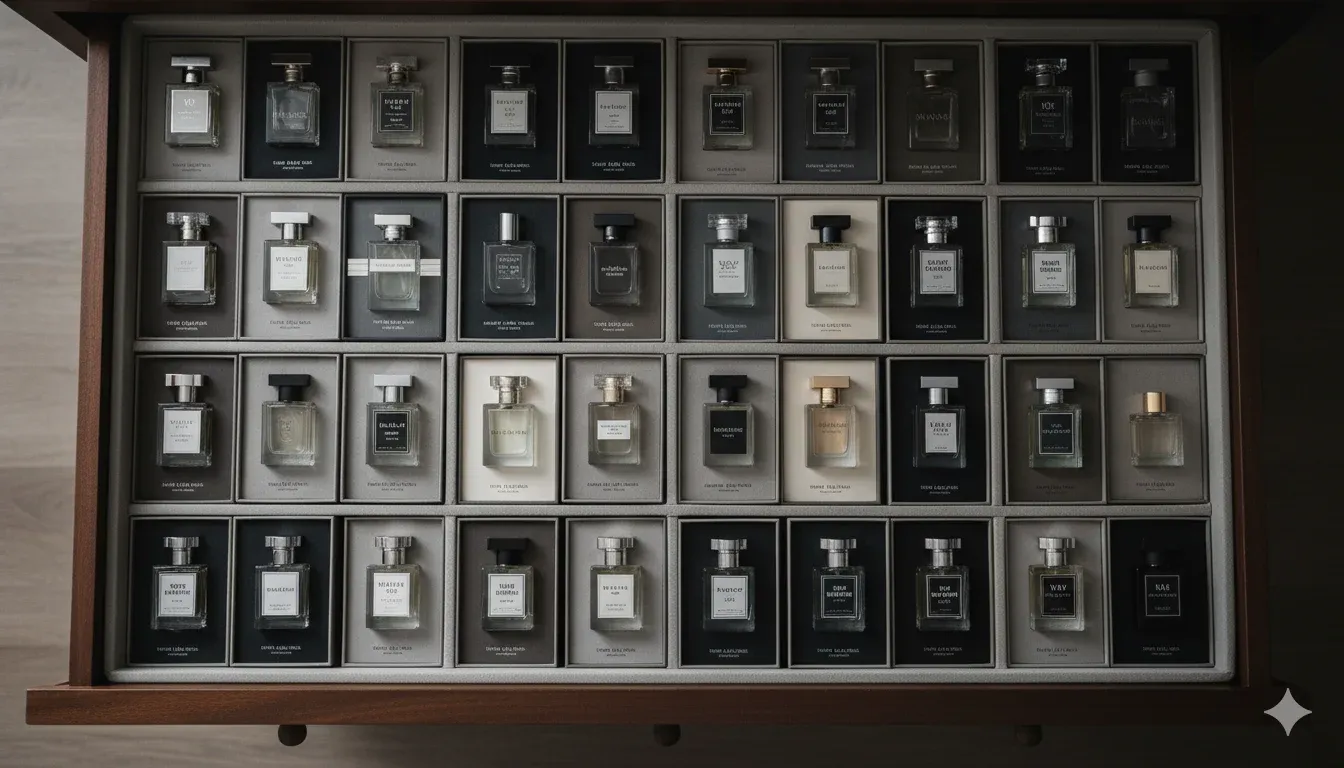
A meticulously organized fragrance collection stored in a cool, dry, and dark drawer
Keep the Original Box: Don't discard the packaging. The box serves as the first line of defense against light and thermal fluctuations, while also protecting the bottle from physical damage.
The "Beauty Fridge" Debate: If you live in an extremely hot climate, a dedicated beauty fridge (set between 10°C - 15°C) can be useful. However, avoid standard kitchen refrigerators—temperatures that are too low can cause natural ingredients to crystallize and fall out of solution.
💡 Conclusion: Scent is Frozen Time
A change in color doesn't necessarily mean a perfume is "ruined." Certain precious raw materials, such as Vanilla, Jasmine, or Sandalwood, actually age like fine wine, becoming darker in color and rounder in aroma over time.
As long as you shield your bottles from light, heat, and humidity, your favorite scent can accompany you for decades. Protecting your perfume is not just about the liquid; it's about preserving the precious memories linked to those notes.
➡️ What's the next chapter?
Now that we've mastered the art of perfume storage, we can explore more practical applications: